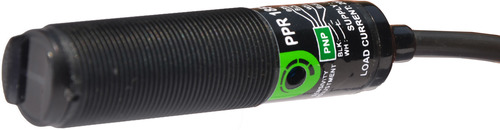
AutonixPPR 18500 N3 Photoelectric Sensor - Dealer, Supplier
Weare dealer and supplier of Autonix PPR 18500 N3 Photoelectric Sensorin India, Mumbai, Delhi, Ahmedabad, Chennai, Kolkata, Pune, Nashik,Aurangabad, Nagpur Vapi, Silvassa, Surat, Vadodara, Rajkot,Gandhidham, Morbi, Indore, Bhopal, Faridabad, Ghaziabad, Noida,Gurgaon, Coimbatore, Bangalore, Hyderabad, Kanpur, Goa,Visakhapatnam, Cochin, Ernakulam, Ludhiana, Chandigarh, Baddi,Dehradun, Sangli, Satara, Ichalkarnji, Solapur, Kupwad, Kolhapur,Pimpri, Chinchwad, Jalgaon, Surat, Baroda, Morbi, UAE, Bangladesh,Nepal, Bhutan, Dubai, Saudi Arabia, United Arab Emirates, Abu Dhabi,Bahrain, Qatar, Muscat, Oman, Sri Lanaka, South Africa, Myanmar,Thailand, Vietnam, Jakarta, Indonesia.
Weare dealer, supplier of various manufacture of Autonics PhotoelectricSensor, Autonics Proximity Sensor, Autonics Capacitive Sensor,Autonics Fiber Optic Sensor, Autonics Fiber Optic Cable, AutonicsDoor Sensor, Autonics Area Sensor, Autonics Humidity Sensor, AutonicsPressure Sensor, Autonics Encoder, Autonics Encoder Wheel Type,Autonics Connector Cable, Autonics Cable Connector, AutonicsController Sensor, Autonics Reflector, Autonics PID Controller,Autonics Temperature Controller, Autonics Counter, Autonics Timer,Autonics Panel Meter, Autonics Pluse Meter, Autonics Scaling Meter,Autonics Buzzer, Autonics Contact Elements, Autonics ControlSwitches, Autonics Thyristor Controller, Autonics PowerController, Autonics SSR, Autonics Stepper Motor, Autonics StepperMotor Drive, Autonics Switches, Autonics Terminal Blocks, AutonicsConnection Box in India.
Versatile Detection for Diverse ApplicationsThe PPR 18500 N3 suits various industrial setups, from packaging to conveyor systems and assembly lines. Its adjustable sensitivity ensures high accuracy for detecting numerous object types. Whether you require diffuse reflective or through-beam operation, the sensor adapts to your detection needs, making it an essential component for modern automation.
Robust Build for Demanding EnvironmentsEngineered for durability, this photoelectric sensor endures shocks up to 500m/s and vibrations from 10 to 55Hz. Its IP66-rated housing resists dust and water, while the wide operating temperature range ensures consistent performance in harsh surroundings. The polycarbonate lens and tough plastic housing support reliability and longevity.
Effortless Integration and Reliable OperationWith a standard 3-wire DC interface, the PPR 18500 N3 is easily wired to existing automation systems. Reverse polarity and short-circuit protection further enhance its dependability. The sensors red LED output indicator, fast 1ms response, and adjustable detection range simplify setup, status monitoring, and maintenance for engineers and operators.
FAQs of Autonix PPR 18500 N3 Photoelectric Sensor:
Q: How does the Autonix PPR 18500 N3 Photoelectric Sensor detect objects?
A: This sensor uses a modulated infrared LED as its light source and detects objects via diffuse, through-beam, or retroreflective modes, based on the selected model. Its detection method and adjustable sensitivity enable reliable presence detection of a variety of objects, regardless of size or material.
Q: What environments and industries can the PPR 18500 N3 be used in?
A: The sensor is designed for industrial automation, including packaging, conveyor systems, and assembly lines. Its IP66 rating, wide temperature tolerance (-25C to +55C operational), and resistance to shock and vibration make it suitable for both standard and challenging industrial environments.
Q: When should I adjust the sensors sensitivity or detection mode?
A: Sensitivity should be adjusted during installation or when the type or size of detectable objects changes, ensuring optimal detection performance. The detection mode (diffuse, through-beam, or retroreflective) should be selected depending on application requirements and the physical setup of the automation system.
Q: Where can the Autonix PPR 18500 N3 be mounted?
A: This sensor offers flexible installation optionspanel or bracket mountingto fit various industrial layouts. The included 2-meter cable aids in positioning within equipment, assembly lines, or production areas, depending on where object presence detection is required.
Q: What are the benefits of using this photoelectric sensor?
A: Key benefits include high detection accuracy, adjustable sensitivity, simple integration (3-wire DC), and operational reliability under tough industrial conditions. With fast response time, robust construction, and protective features, the sensor enhances automation efficiency and minimizes downtime.
Q: How is the output status of the sensor indicated and what type of control output is provided?
A: A red LED indicator shows when the sensor output is active (Output ON). The control output is digital, supporting NPN Normally Open/Normally Closed configurations, suitable for integration with modern automation controllers.