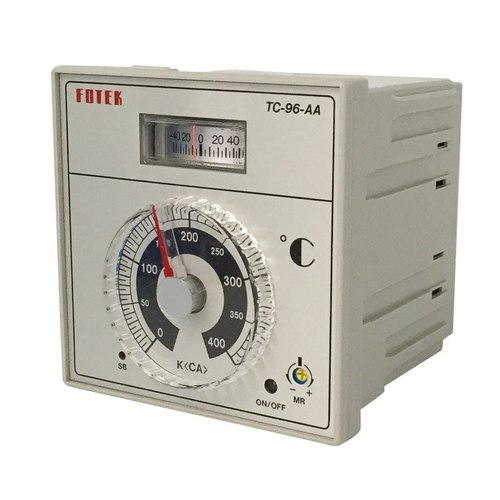
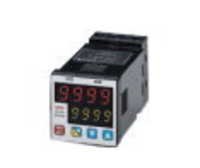
Fotek TC96-AA Temperature Controller Price & Specifications
Wireless No
Weight Approximately 350g
Voltage 110V/220V AC
Usage Industrial Automation, Process Control
Signal Type Analog/Digital
Sensor Type Thermocouple / RTD
Sensitivity High
Response Time About 150ms
Resolution 1A C or 0.1A C (depending on model)
Product Type Temperature Controller
Power Consumption Less than 5VA
Output Relay, SSR, 4-20mA, 0-10VDC
Operating Temperature 0A C to 50A C
Mounting Type Panel Mount
Measurement Range -199A C ~ 1800A C (depending on sensor type)
Material ABS Plastic Cabinet
Interface Terminals
Input Thermocouple (K, J, T, E, R), RTD (Pt100)
IP Rating IP40
Function Temperature Measurement and Control
Features Dual LED Display, Auto/Manual Control, Alarm, Self-diagnosis
Cable Length Customizable (Sensor dependent)
Application Furnace, Oven, Incubator, Packaging Machine
Accuracy A 0.5% of full scale
About Fotek TC96-AA Temperature Controller Detail
Take advantage of the illustrious Fotek TC96-AA Temperature Controlleran essential solution for radiant temperature monitoring in industrial automation. This first-string device features a 4-digit, 7-segment LED display and advanced ON/OFF or PID control modes for supreme process accuracy (0.5%). Encased in flame retardant polycarbonate, it delivers high reliability and safety, ideal for furnaces, ovens, packaging machines, and more. Multiple alarms, swift 150ms response, and versatile output options ensure optimized performance. Offer includes Instant Checkoutperfect for dealers, exporters, and fabricators across India.
Versatile Applications & Commercial Use
The Fotek TC96-AA Temperature Controller excels across varied application surfaces such as furnaces, ovens, incubators, and packaging machines. At the site of applicationmanufacturing units, processing plants, and industrial automationthis controller is essential for maintaining precise temperatures. Its commercial uses span multiple sectors, including food processing, pharmaceuticals, and materials fabrication. With its robust features, traders, suppliers, and service providers find it invaluable for reliable, scalable temperature control in demanding environments.
Premium Delivery & Sample Policies
Enjoy premium delivery service and competitive list prices for the Fotek TC96-AA, catering to both the domestic market and commercial buyers. Delivery times are generally prompt, ensuring your operations remain uninterrupted. Samples are available upon request, with flexible policies tailored to dealers, retailers, and importers. Whether youre a wholesaler looking to trial this advanced controller or a retailer aiming for quick dispatch, our streamlined process ensures speed and satisfaction.
FAQs of Fotek TC96-AA Temperature Controller:
Q: How does the Fotek TC96-AA Temperature Controller enhance process reliability in industrial automation?
A: The TC96-AA offers precise PID control, fast sampling, and real-time dual LED display, ensuring accurate temperature management and reducing process fluctuations for consistently reliable operations.
Q: What application areas benefit most from using the Fotek TC96-AA?
A: This controller serves numerous settings such as furnaces, ovens, incubators, and packaging machines, making it suitable for manufacturing, food processing, pharmaceuticals, and laboratory environments.
Q: When should I use the high or low process value alarm features?
A: Use the high or low process value alarms when you need to safeguard against temperature deviations, protecting equipment and products during sensitive manufacturing or laboratory processes.
Q: Where can the Fotek TC96-AA be installed for optimal performance?
A: Optimal installation is achieved on panel-mounted setups in controlled industrial environments, where it operates within 0C to 50C and relative humidity of 3585% RH (non-condensing).
Q: What is the process for ordering a sample and what policy applies?
A: To order a sample, contact your dealer or distributor. Samples are available according to flexible policies, often dependent on bulk or commercial requirementsdetails are typically outlined at the time of inquiry.
FAQs Related to Fotek TC96-AA Temperature Controller
What are the situations where it is required to install a temperature controller?
A temperature
controlling system is a good option for the application if the below-written
points are targeted:
Gain tighter
control over your process temperatures.
Save time and money
Regulate the heating
and cooling process.How do a temperature controller and sensor shooter work?
Usually, the
mechanism is such that the controller takes an input from the temperature
sensor like an RTD or thermocouple. The sensor then displays a digital readout
of the measured temperature followed by an automatic on or off sequence to
achieve the desired temperature at the mentioned set point. The sensor is
connected to a control element like a heater or fan.
Where are the temperature controllers often used?
Temperature
controllers or the PID are usually installed in applications where the user has
a constant requirement to regulate the temperature or create certain conditions
where the temperature increases or decreases as the specified set point.
Industries like thermoforming machines, packaging machines, food processing,
food storage, plastic extrusion, injection molding machines, and blood banks
need to install temperature controllers.
In industrial applications, what is the role of a temperature controller?
For any industrial
application, a temperature controller controls industrial or laboratory heating
and cooling. The sensor measures the actual temperature in the general model
and compares it with the previously set temperature. Thereby it makes an effort
to reach the set temperature by either cooling the temperature with a fan or
raising the temperature with the use of a heater.
What is temperature control in food handling?
The fundamental
principle and basic prerequisite for food safety in the food industry are that
the food handlers regulate the temperatures. This refers to a process in which
the temperature of all the food is controlled to ensure that it is safe for
consumption. If the temperature is not controlled, it could result in food-borne
illness, lawsuits, fines, and poor inspection ratings.

 GST No.27ACRPG0717F1ZQ


 Our Products