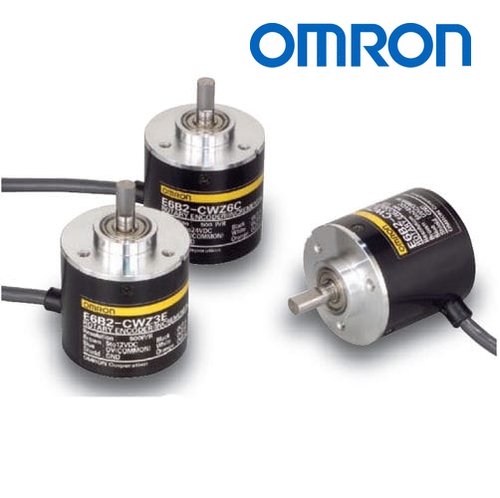
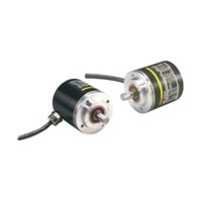
Omron Rotary Encoder Price & Specifications
Wireless No
Weight Approx. 100-200g
Voltage 5-24 V DC
Usage Industrial automation, position sensing
Signal Type A, B, Z phase
Sensor Type Optical Rotary Encoder
Sensitivity Standard
Response Time Below 1 ms
Resolution 1024 P/R (Pulses per Revolution)
Product Type Rotary Encoder
Power Consumption Max. 80 mA
Output Incremental, Quadrature phase output
Operating Temperature -10A C to +70A C
Mounting Type Panel/shaft mount
Measurement Range 360A (full rotation)
Material Metal and Plastic
Interface Cable Output, Open-collector
Input Rotational movement
IP Rating IP50
Function Converts rotational position into electrical signal
Features Compact design, Durable, High-speed response
Cable Length Standard 2 meters
Application Robotics, CNC machines, servo motors, conveyor systems
Accuracy High
About Omron Rotary Encoder Detail
Take advantage of the heroic capabilities of the Omron Rotary Encoder, designed with a 6 mm shaft diameter and a first-string ball bearing system ensuring stable, reliable performance at up to 6000 RPM. Its astonishing 1024 pulses per revolution delivers high accuracy, perfect for industrial automation, robotics, or CNC machines. The aluminum alloy case offers superior durability, while the easy-to-connect lead wire interface, IP50 rating, and wide voltage compatibility (5-24 V DC) make installation seamless. Select this compact, robust sensor and experience an electrical life exceeding 100,000 cycles. Grab yours today and see the difference!
Omron Rotary Encoder: Competitive Advantages & Features
The Omron Rotary Encoder stands out with its high-resolution incremental output, reliable ball bearing, and rugged aluminum alloy housing. Its compact design ensures effortless mounting and integration into various industrial setups. Additional features include exceptional vibration resistance, swift response time below 1 ms, remarkable electrical life, and efficient insulation. Crafted from durable metal and plastic components, it promises consistent performance under demanding conditions. This makes it a first-choice for position sensing, robotics, and automation systems requiring superior accuracy.
Omron Rotary Encoder: Supply, Logistics & Payment
Our supply chain ensures a steady availability of Omron Rotary Encoders, with swift transport services from Indias major FOB ports. We accept purchase orders via both online and offline channels, ensuring convenience and transparency. Rates are competitive and reflect outstanding value for such a technologically advanced product. Secure payment terms are offered, including flexible options suitable for dealers, traders, and service providers alike. Trust our reliable delivery network for prompt fulfillment of your automation requirements.
FAQs of Omron Rotary Encoder:
Q: How is the Omron Rotary Encoder used in industrial automation?
A: The Omron Rotary Encoder converts rotational movement from shafts or motors into precise electrical signals, enabling accurate position sensing and control in industrial automation setups such as conveyor systems, robotics, and servo motors.
Q: What are the primary benefits of selecting the Omron Rotary Encoder?
A: The primary benefits include high accuracy (1024 P/R resolution), robust durability, long electrical life (over 100,000 cycles), superior vibration resistance, and a wide operating temperature range, making it perfect for demanding environments.
Q: Where can the Omron Rotary Encoder be installed?
A: This encoder is suitable for panel or shaft mounting and can be integrated into robotics, CNC machines, conveyor systems, and other industrial equipment requiring reliable position feedback.
Q: What is the process for connecting the Omron Rotary Encoder?
A: The encoder features a lead wire (cable output) connection that can be easily integrated into your existing control system. Open-collector outputs facilitate straightforward interfacing with various automation controllers.
Q: When should I use the Omron Rotary Encoders 2-phase or 3-phase pulse output?
A: Use 2-phase output for incremental position detection and simple direction sensing, and 3-phase pulse output for applications requiring an additional reference signal (Z-phase) for homing or indexing.

 GST No.27ACRPG0717F1ZQ


 Our Products