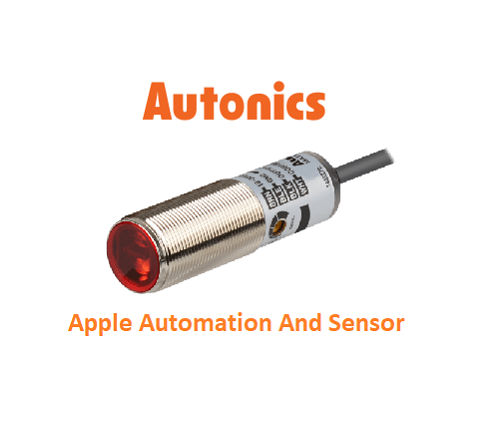
Autonics BRQM100-DDTA Photoelectric Sensors Authorised Distributor, Dealer, Supplier in India.
We Dealer, Supplier and Authorised Distributor of Autonics BRQM100-DDTA Photoelectric Sensor in Mumbai, Delhi, Ahmedabad, Chennai, Kolkata, Apple Automation And Sensor, Pune, Nashik, Aurangabad, Nagpur Vapi, Silvassa, Surat, Vadodara, Rajkot, Gandhidham, Morbi, Indore, Bhopal, Faridabad, Ghaziabad, Noida, Gurgaon, Coimbatore, Bangalore, Hyderabad, Kanpur, Goa, Vishakhapatnam, Cochin, Ernakulum, Ludhiana, Chandigarh, Baddi, Dehradun, China, Korea, Taiwan, Singapore, UAE, Dubai, Malaysia, Srilanka, Bangladesh, South Africa.
Product Overview
Model : BRQM100-DDTA
Brand : Autonics
Sensing type : Diffuse reflective type
Sensing distance : 100mm
Sensing target : Opaque, Translucent material
Light source : Infrared LED(850nm)
Response time : Max. 1ms
Autonics BRQM100-DDTA Photoelectric Sensor
BRQM100-DDTA
BRQM100-DDTA-C-P
BRQM100-DDTA-P
BRQM1M-DDTA
BRQM1M-DDTA-C-P
BRQM1M-DDTA-P
BRQM20M-TDTA
BRQM20M-TDTA-C
BRQM20M-TDTA-C-P
BRQM20M-TDTA-P
BRQM20M-TDTA-P
BRQM30M-TDTA-C-P
BRQM30M-TDTA-P
BRQM3M-PDTA
BRQM3M-PDTA-C
BRQM3M-PDTA-C-P
BRQM3M-PDTA-P
BRQM400-DDTA
BRQM400-DDTA-C
BRQM400-DDTA-C-P
BRQM400-DDTA-P
BRQM5M-TDTA
BRQM5M-TDTA-C
BRQM5M-TDTA-P
Advanced Photoelectric SensingThe BRQM100-DDTA employs cutting-edge photoelectric sensing technology, allowing rapid and accurate detection of objects in industrial operations. Its NPN open collector output supports a variety of control systems, ensuring seamless integration into automated processes and enhanced productivity.
Flexible and Reliable Power OptionsOperating on a wide voltage range of 10-30VDC with high tolerance for fluctuations, this sensor performs reliably even in demanding power environments. It tolerates power supply ripples up to 10%, making it suitable for industries with variable electrical conditions.
Easy Integration and MaintenanceCompact and lightweight, the BRQM100-DDTA is easily mounted in tight spaces and can be rapidly installed or replaced. The 1-year warranty provides assurance of quality, while its sturdy design minimizes maintenance needs and downtime during use.
FAQ's of Autonics BRQM100-DDTA Photoelectric Sensor:
Q: How does the Autonics BRQM100-DDTA Photoelectric Sensor operate?
A: This sensor uses photoelectric technology to detect objects within its range. When an object interrupts the light beam emitted by the sensor, an NPN open collector output signal is triggered, supporting automated control operations in industrial setups.
Q: What are the primary industrial applications of this photoelectric sensor?
A: The BRQM100-DDTA is primarily used in automated production lines, assembly processes, and material handling systems where reliable object detection and counting are essential for efficient operation.
Q: When should this sensor be used over other types of sensors?
A: This sensor is ideal when you require accurate non-contact detection of objects, particularly when dealing with moving parts, delicate items, or in environments with limited physical space.
Q: Where can I purchase the Autonics BRQM100-DDTA in India?
A: The sensor is available through a wide network of authorized dealers, distributors, exporters, fabricators, importers, manufacturers, suppliers, and retailers across India.
Q: What is the installation and setup process for this sensor?
A: Installation involves securely mounting the sensor in the desired location and connecting it to a 10-30VDC power source. No specialized calibration is typically needed, ensuring a quick and straightforward setup.
Q: How does the warranty benefit the end user?
A: A 1-year warranty is provided, offering users peace of mind regarding product reliability. In case of manufacturing defects or failures, repair or replacement services are covered within this period.
Q: What advantages does the NPN open collector output provide?
A: The NPN open collector output allows simple connection to PLCs and other control equipment, making it versatile for various industrial automation applications and compatible with standard control systems.

 GST No.27ACRPG0717F1ZQ


 Our Products