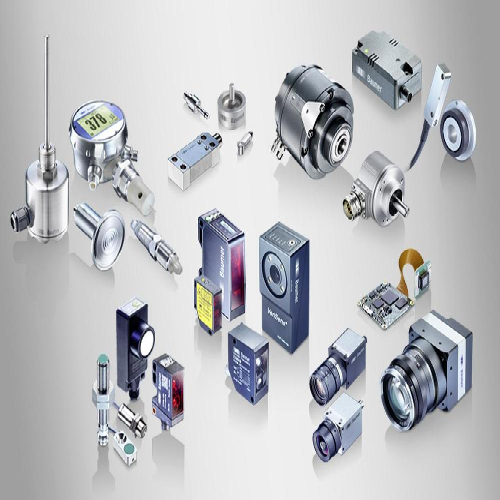
BaumerCTX 3.2.3.B27.0 - Dealer, Supplier
Weare dealer and supplier of Baumer CTX 3.2.3.B27.0 in India, Mumbai,Delhi, Ahmedabad, Chennai, Kolkata, Pune, Nashik, Aurangabad, Nagpur,Vapi, Silvassa, Surat, Vadodara, Rajkot, Gandhidham, Morbi, Indore,Bhopal, Faridabad, Ghaziabad, Noida, Gurgaon, Coimbatore, Bangalore,Hyderabad, Kanpur, Goa, Visakhapatnam, Cochin, Ernakulam, Ludhiana,Chandigarh, Baddi, Dehradun, Sangli, Satara, Ichalkarnji, Solapur,Kupwad, Kolhapur, Pimpri, Chinchwad, Jalgaon, Surat, Baroda, Morbi,UAE, Bangladesh, Nepal, Bhutan, Dubai, Saudi Arabia, United ArabEmirates, Abu Dhabi, Bahrain, Qatar, Muscat, Oman, Sri Lanaka, SouthAfrica, Myanmar, Thailand, Vietnam, Jakarta, Indonesia. We areDealer, Supplier of Baumer Sensor, Baumer Capacitive Sensor, BaumerConnector Cable, Baumer Distance Sensor, Baumer Encoder, Baumer FiberOptic Sensor, Baumer Photoelectric Sensor, Baumer Proximity Sensor,Baumer Reflector, Baumer Slot Sensor, Baumer Ultrasonic Sensor,Baumer Pressure Transmitter, Baumer Pressuregauge.
Precision and Safety CombinedBaumer CTX 3.2.3.B27.0 offers Class 0.5 accuracy, ideal for energy metering and monitoring tasks requiring trustworthy data. It features robust dielectric strength up to 3 kV and supports insulation voltages up to 720V, delivering safety during operations in demanding electrical environments.
Durable, Compact DesignWith mechanical stability to withstand shocks and vibrations, an IP20-rated flame-resistant housing, and RoHS compliance, the device is reliable for industrial installations. At approximately 150g, its compact form factor saves space in panel and DIN rail setups, simplifying integration without sacrificing protection.
Effortless Installation and Maintenance-Free UseInstallation is streamlined using the screw terminal connection and panel mount compatibility. Once installed, the maintenance-free design ensures lasting performance throughout its service life, making it a sound investment for distribution boards and control panels in India's energy and automation sectors.
FAQ's of Baumer CTX 3.2.3.B27.0:
Q: How do I install the Baumer CTX 3.2.3.B27.0 current transformer?
A: The transformer is designed for panel mounting and is compatible with DIN rail systems. Simply secure the unit on the desired mounting surface, then connect primary and secondary wiring to the labeled S1 and S2 screw terminal connections. Be sure to follow standard electrical safety procedures during installation.
Q: What type of applications is this current transformer suitable for?
A: This model is ideal for energy metering, electrical monitoring, and control systems within industrial and automation environments. Its high accuracy and low phase displacement make it suitable for panels requiring precise current measurements up to 3A at primary, with a 5A secondary output.
Q: Where can this device be used for optimal performance?
A: The Baumer CTX 3.2.3.B27.0 performs best in indoor panels, distribution boards, or automation cabinets where current measurement and protection are essential. With its compact housing and vibration-resistant design, it suits various demanding industrial locations.
Q: What benefits does the CTX 3.2.3.B27.0 provide to energy management systems?
A: With its Class 0.5 accuracy and low response time (<1 ms), the transformer ensures precise current monitoring. Its robust insulation, minimal power consumption, and maintenance-free design contribute to reliable, long-lasting energy management solutions.
Q: How does the flame resistance and material quality enhance device safety?
A: The housing is made from high-grade, encapsulated plastic that complies with UL94-V0 flame resistance standards, offering additional protection against fire hazards. This construction, along with RoHS compliance, provides both safety and environmental protection during prolonged use.
Q: When is maintenance required for this transformer?
A: The Baumer CTX 3.2.3.B27.0 is designed as maintenance-free. Routine inspection of electrical connections and periodic cleaning of the external housing (if necessary) will help maintain optimal performance, but no internal maintenance is required during normal operation.
Q: What is the process for connecting the secondary output in a control panel?
A: After securely panel-mounting the device, connect the secondary output wires to terminals S1 and S2, following the marked polarity. This analog signal can be routed to energy meters, monitors, or protective relays within the system for further processing.

 GST No.27ACRPG0717F1ZQ


 Our Products