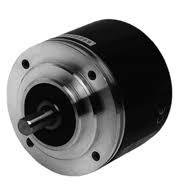
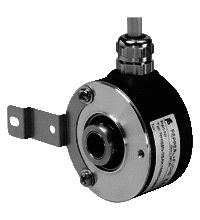
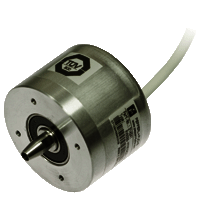
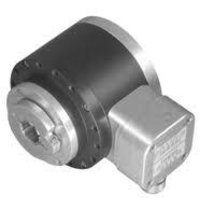
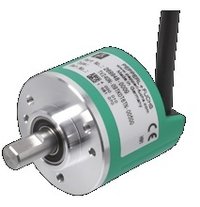
Pepperl Fuchs RVI78 Incremental Rotary Encoders Price & Specifications
Wireless No
Weight Approx. 470 g
Voltage 5...30 V DC
Usage Industrial automation, machinery monitoring
Signal Type Incremental digital
Sensor Type Optical Rotary Encoder
Sensitivity High resolution, fast response
Response Time < 1 Aus
Resolution max. 5000 pulses/revolution
Product Type Incremental Rotary Encoder
Power Consumption < 1 W
Output HTL/TTL (A, B, Z channels)
Operating Temperature -40 A C to +85 A C
Mounting Type Clamping flange, synchro flange
Measurement Range 360A rotary input
Material Aluminum housing, stainless steel shaft
Interface Cable; 5-pin/8-pin connector
Input Rotary motion (shaft driven)
IP Rating IP65
Function Provides position and speed feedback via incremental pulses
Features Robust construction, maintenance-free, reverse polarity protection
Cable Length up to 2 meters
Application Position and velocity measurement, motor feedback, conveyor systems
Accuracy Up to A 1 pulse
About Pepperl Fuchs RVI78 Incremental Rotary Encoders Detail
Reserve your advantage with the splendid Pepperl Fuchs RVI78 Incremental Rotary Encodera best-seller celebrated for its pristine precision in industrial automation. Capitalise on sterling output precision, ensuring up to 1 pulse accuracy with a robust construction featuring an aluminum housing and stainless steel shaft. Ideal for high-speed machinery monitoring, this encoder supports rotary input up to 6000 rpm and resolutions of 5000 pulses/rev. Its resilient design, maintenance-free operation, and IP65 rating guarantee performance even in the harshest environments. Secure modern motion measurement for your operationsexclusively distributed through top dealers, exporters, and suppliers across India.
Versatile Application Excellence
The Pepperl Fuchs RVI78 Incremental Rotary Encoder excels in position and velocity measurement across diverse industrial applications. Its pristine material construction, with an aluminum body and stainless steel shaft, ensures durability and optimum performance in conveyor systems, motor feedback loops, and machinery monitoring. Designed for installation sites requiring high precision and reliability, such as automated plants, factories, and harsh environments, the RVI78 seamlessly integrates with your existing industrial setups, offering consistent, high-resolution feedback in demanding conditions.
Assured Payment & Secure Shipment
Products like the Pepperl Fuchs RVI78 Incremental Rotary Encoder are shipped using secure packaging to ensure pristine delivery conditions. Choose from versatile payment terms including advance payments, credit, and LC, tailored for your business convenience. Shipments are dispatched promptly through trusted logistics partners for safe and timely delivery. Sample policy enables clients to request test units before bulk purchase, allowing confidence in real-world performance prior to committing to larger orders.
FAQs of Pepperl Fuchs RVI78 Incremental Rotary Encoders:
Q: How does the Pepperl Fuchs RVI78 Incremental Rotary Encoder operate?
A: It uses optical technology to provide incremental digital pulses based on shaft rotation, offering accurate position and speed feedback for various machinery.
Q: What applications benefit the most from this encoder?
A: Industrial automation environments, conveyor systems, and motor feedback systems benefit greatly due to its high accuracy, pristine construction, and robust performance.
Q: Where can the RVI78 be installed for optimal results?
A: Install the RVI78 on machinery requiring precise position or velocity monitoring, such as automated production lines, material handling systems, or motor systems.
Q: What is the process for receiving the product and payment?
A: After choosing suitable payment terms, the product is securely shipped in protective packaging to ensure it arrives in pristine condition.
Q: What material features contribute to its reliability?
A: An aluminum housing and stainless steel shaft provide superior durability, while IP65 protection ensures resistance to dust and moisture.
Q: When should the encoder be considered for upgrading older systems?
A: Upgrade when seeking improved measurement accuracy, higher resolution, fast response, or enhanced environmental durability in critical automation processes.

 GST No.27ACRPG0717F1ZQ


 Our Products