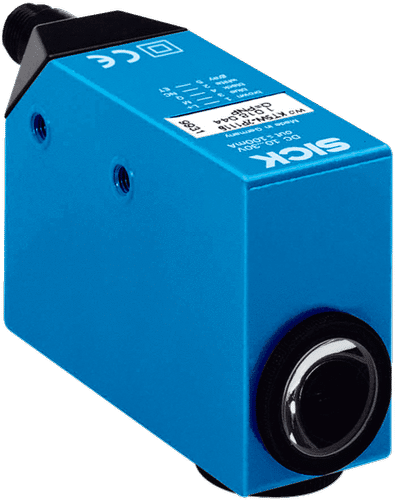
Sick KT5W-2P1116 Color Mark Sensor Price & Specifications
Wireless No
Weight Approx. 100g
Voltage 12a 24 V DC A 10%
Usage Automated packaging, labeling, printing industries
Signal Type Digital (Switching output)
Sensor Type Photoelectric Color Mark Sensor
Sensitivity Adjustable via teach-in button
Response Time <50 Aus
Resolution Fine resolution
Product Type Color Mark Sensor
Power Consumption a 2.5 W
Output PNP, NPN (switchable), Push-pull output
Operating Temperature -10A C to +55A C
Mounting Type Surface or bracket mount (M3 screws)
Measurement Range 12 mm (focal distance)
Material Plastic Housing
Interface Cable, M12 connector
Input 12a 24 V DC
IP Rating IP67
Function Detection of color marks, print marks and contrasts
Features 3-color LED light source, teach-in button, self-monitoring, robust design
Cable Length 2 m (with connector)
Application Packaging, print machinery, labeling
Accuracy High detection accuracy
About Sick KT5W-2P1116 Color Mark Sensor Detail
The meritorious Sick KT5W-2P1116 Color Mark Sensor stands out as an elite solution for precise detection of color marks, print marks, and contrasts. This acclaimed sensor features a sought-after RGB LED light source, elite switching frequency up to 10 kHz, and minimized hysteresis, ensuring unparalleled accuracy in demanding environments. Enjoy exclusive benefits like instant checkout capability, self-monitoring functionality, and enhanced light immunity up to 10,000 Lux. Its robust IP67-certified housing, adjustable sensitivity, and versatile PNP/NPN outputs make it indispensable for automated packaging, labeling, and printing industries across India.
Advanced Features and Application Uses
Engineered with a combination of a 3-color RGB LED, teach-in adjustment, and self-monitoring capabilities, the Sick KT5W-2P1116 delivers exceptional accuracy in diverse industrial settings. Suitable for surface or bracket mounting, this color mark sensor provides consistent, fine-resolution detection, making it highly effective for packaging, print, and labeling machinery. Built-in LED status indicators and robust housing design ensure long-term reliability and minimize maintenance requirements in commercial operations.
Reliable Supply & Certifications for Export Markets
Our meritorious Sick KT5W-2P1116 Color Mark Sensor is always available for prompt drop-off and shipping to both domestic and export markets. Shipped goods are reliably dispatched via leading FOB ports across India to ensure uninterrupted supply. This exclusive sensor is CE certified, adheres to EN 60947-5-2 standards, and is supported by a network of authorized dealers, importers, and fabricators, providing assurance for quality, safety, and export compliance.
FAQs of Sick KT5W-2P1116 Color Mark Sensor:
Q: How does the Sick KT5W-2P1116 Color Mark Sensor ensure accurate detection?
A: The sensor uses a sophisticated RGB LED light source with minimized hysteresis and high switching frequency, enabling precise response to subtle color mark and contrast variations on fast-moving production lines.
Q: What commercial industries benefit most from this color mark sensor?
A: The Sick KT5W-2P1116 is especially sought-after in the automated packaging, labeling, and printing industries, where dependable color mark detection is critical for operational efficiency and production accuracy.
Q: Where can this sensor be mounted for optimal performance?
A: This elite sensor offers versatile mounting options, including surface or bracket mounting with M3 screws, making it adaptable to various industrial machine layouts and applications.
Q: What certifications does the KT5W-2P1116 sensor hold for export markets?
A: It is CE certified and conforms to EN 60947-5-2 reference standards, ensuring broad acceptability and compliance in global markets.
Q: What is the process for adjusting the sensitivity of this sensor?
A: The user-friendly teach-in button and manual potentiometer enable quick, on-site adjustment of the sensors sensitivity to best suit different material surfaces and marking conditions.
Q: How does the sensor protect itself against electrical faults?
A: It incorporates comprehensive protection circuits against reverse polarity and short-circuit occurrences, safeguarding both the sensor and the connected devices.

 GST No.27ACRPG0717F1ZQ


 Our Products