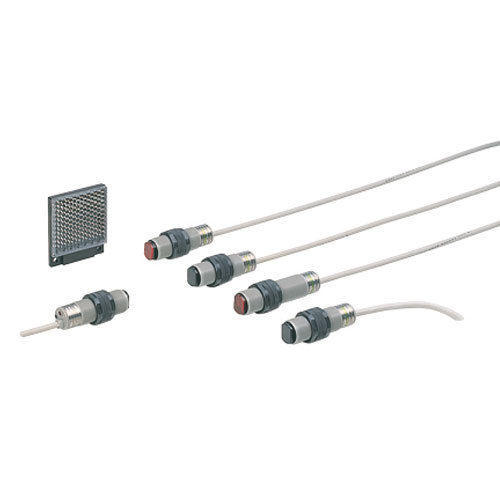
SunxCY Photoelectric Sensors - Dealer, Supplier
Weare dealer and supplier of Sunx CYPhotoelectric Sensors in India, Mumbai, Delhi, Ahmedabad,Chennai, Kolkata, Pune, Nashik, Aurangabad, Nagpur Vapi, Silvassa,Surat, Vadodara, Rajkot, Gandhidham, Morbi, Indore, Bhopal,Faridabad, Ghaziabad, Noida, Gurgaon, Coimbatore, Bangalore,Hyderabad, Kanpur, Goa, Visakhapatnam, Cochin, Ernakulam, Ludhiana,Chandigarh, Baddi, Dehradun, Sangli, Satara, Ichalkarnji, Solapur,Kupwad, Kolhapur, Pimpri, Chinchwad, Jalgaon, Surat, Baroda, Morbi,UAE, Bangladesh, Nepal, Bhutan, Dubai, Saudi Arabia, United ArabEmirates, Abu Dhabi, Bahrain, Qatar, Muscat, Oman, Sri Lanaka, SouthAfrica, Myanmar, Thailand, Vietnam, Jakarta, Indonesia.
Weare dealer, supplier of various manufacture of PanasonicPhotoelectric Sensor, Panasonic Mark Sensor, Panasonic Area Sensor,Panasonic Fiber Optic Amplifier, Panasonic Fiber Optic Cable, Panasonic Fiber Optic Sensor, Panasonic Laser Sensor, PanasonicLimit Switch, Panasonic Optical Sensor, Panasonic Pressure Sensor,Panasonic Proximity Sensor, Panasonic Connector Cable.
Robust & Reliable DetectionWith high ambient light immunity and stable output, Sunx CY Photoelectric Sensors provide dependable object detection even in demanding industrial conditions. Operating reliably in environments with bright sunlight or incandescent light, they ensure consistent performance where precision and safety are vital.
Flexible Mounting & Easy AdjustmentInstallation is facilitated by versatile mounting options, including panel and DIN rail mounting. Adjusting sensitivity is straightforward, thanks to an onboard potentiometer or teach-in button, enabling quick setup and adaptation to diverse sensing tasks on the factory floor.
Comprehensive Signal & Safety FeaturesEquipped with status LEDs, short circuit and reverse polarity protection, and options for NPN/PNP, relay, or open-collector outputs, these sensors integrate easily with existing systems. Designed for rapid response, they deliver ON/OFF digital signals instantly, supporting fast-paced automation.
FAQs of Sunx CY Photoelectric Sensors:
Q: How do I adjust the sensitivity of the Sunx CY Photoelectric Sensor?
A: Sensitivity can be manually set using the potentiometer or a teach-in button, depending on your chosen model. This allows you to tailor the sensor to your specific application, ensuring reliable and precise detection.
Q: What environments are suitable for using Sunx CY Photoelectric Sensors?
A: These sensors are designed for harsh industrial environments, including high dust, vibration, and shock. With IP67 protection and resistance to sunlight and incandescent light interference, they are ideal for packaging lines, conveyors, robotics, and assembly operations.
Q: When should I choose through-beam, retro-reflective, or diffuse detection models?
A: Choose the through-beam model for long-range detection (up to 10 m), retro-reflective for easy setup with a reflector, and diffuse for short-range or direct detection of varied objects. The selection depends on your applications sensing distance and mounting constraints.
Q: Where can Sunx CY Photoelectric Sensors be mounted?
A: These sensors can be mounted on panels or DIN rails, offering flexibility for integration into different industrial setups and control cabinets, whether on conveyor belts, robotic arms, or assembly lines.
Q: What benefits do the operation and stability indicators provide?
A: The LED operation and stability indicators offer instant visual confirmation of sensor status and detection reliability, simplifying maintenance and minimizing downtime by alerting operators to any issues immediately.
Q: Is the sensor resistant to electrical and mechanical stresses?
A: Yes, Sunx CY sensors are engineered for durability, featuring short circuit and reverse polarity protection, resistance to vibration (1055 Hz, 1.5 mm amplitude), and shock (up to 500 m/s). Their robust housing ensures long-term stability and performance.
Q: What is the typical process for installing and wiring the sensor in an industrial application?
A: Installation involves mounting the sensor using panel or DIN rail hardware, then connecting it via the pre-wired 2 m cable or M8/M12 connector. Wiring supports NPN/PNP or relay outputs, and setup is completed by adjusting sensitivity to match the target object and environment.

 GST No.27ACRPG0717F1ZQ


 Our Products