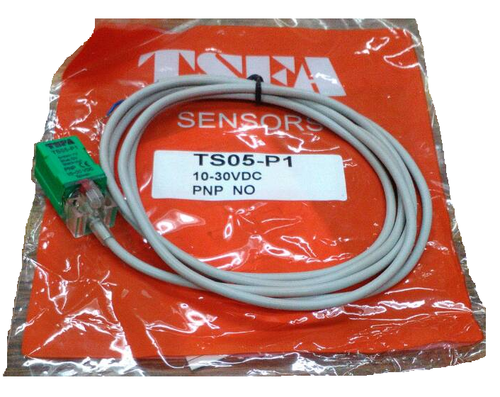
TSFA Sensor Price & Specifications
Wireless No
Weight 85g
Voltage 5V to 24V DC
Usage Water quality monitoring, process control
Signal Type Voltage, TTL signal
Sensor Type Optical Turbidity Sensor
Sensitivity High sensitivity - up to 0.01 NTU change
Response Time <500 ms
Resolution 0.01 NTU
Product Type TSFA Sensor
Power Consumption Max 20mA
Output Analog (V), Digital (TTL)
Operating Temperature 0A C to 60A C
Mounting Type Panel, Inline, Clamp Mounting Supported
Measurement Range 0.01 NTU to 4000 NTU
Material High-grade thermoplastic body with metallic sensing probe
Interface 3-pin/4-pin connector
Input DC Analog/TTL Logic
IP Rating IP67
Function Turbidity and Suspended Fluid Analysis
Features Waterproof construction, anti-corrosion, fast signal response
Cable Length 1 meter (customizable)
Application Industrial, Laboratory, Environmental
Accuracy A 2%
About TSFA Sensor Detail
Pick Yours: the preeminent TSFA Sensor, specially engineered for those demanding glory in precise water quality monitoring. Highlighted by its astounding real-time continuous output and high sensitivity (detecting as low as 0.01 NTU), this sensor redefines industrial, laboratory, and environmental analytics. Enjoy double-sealed EMC-compliant construction, glorious anti-corrosion features, and a factory-calibrated system that is also user-calibratable. With a robust voltage range, external data logging, and versatile mounting, its black/white high-grade thermoplastic body with a metallic probe is ready to empower you. Glorious compliance to RoHS & CE standards. Pick yours today!
TSFA Sensor: Used By & Special Features
The TSFA Sensor is widely employed by industrial operators, laboratory analysts, and environmental professionals for dependable turbidity and suspended fluid analysis. Its special features include factory and user calibration, remarkable high sensitivity, and real-time signal output. The device boasts waterproof construction, anti-corrosion capabilities, fast response time (under 500 ms), and versatile mounting options, making it a highlighted solution for those who value accuracy, efficiency, and robust performance in a multitude of applications.
Export Markets & Certifications: Rapid Order Processing
The TSFA Sensor is exported extensively to markets worldwide, with a strong presence in industrial and environmental sectors across India and beyond. Backed by globally recognized certifications, including RoHS and CE, every sensor meets rigorous quality benchmarks. With streamlined order processing, prompt freight arrangements, and competitive sale prices, customers are assured of timely deliverytypically within the agreed delivery timeframe. Reliability from purchase to installation is our pride, ensuring satisfaction from dealer to end user.
FAQs of TSFA Sensor:
Q: How is the TSFA Sensor calibrated and can users perform recalibration?
A: The TSFA Sensor comes factory calibrated for immediate use, and users have the ability to perform recalibration as needed to maintain optimum accuracy in their unique applications.
Q: What major benefits does the double sealed housing provide?
A: A double sealed housing ensures superior ingress protection, making the sensor waterproof (IP67 rated) and highly resistant to environmental contaminants and corrosion, which is essential for robust, long-term performance.
Q: Where can the TSFA Sensor be mounted for efficient usage?
A: This sensor offers exceptional flexibility in mounting and can be installed as a panel, inline, or clamp mount, adapting seamlessly to various setups in industrial, laboratory, and environmental monitoring systems.
Q: When should I consider using the TSFA Sensor for water quality analysis?
A: The TSFA Sensor is an excellent choice whenever precise measurement of turbidity or suspended fluids is required, particularly where high sensitivity and compliance with quality standards are essential.
Q: What certifications does this sensor meet for industrial and environmental applications?
A: The sensor carries both RoHS and CE certifications, ensuring it adheres to global safety and environmental protection standards for use in industrial and laboratory environments.
Q: How does the real-time continuous output enhance data logging?
A: Real-time continuous output allows seamless, external data logging and ensures that every variation in turbidity is immediately captured, facilitating prompt decision-making and quality control actions.

 GST No.27ACRPG0717F1ZQ


 Our Products