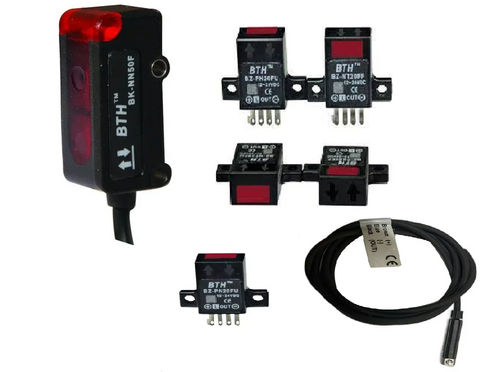
BTHBI-52S-2000-L5MagneticSensor- Dealer, Supplier
Weare dealer and supplier of BTHBI-38S-200-PUMagneticSensor in India, Mumbai, Delhi,Ahmedabad, Chennai, Kolkata, Pune, Nashik, Aurangabad, Nagpur Vapi,Silvassa, Surat, Vadodara, Rajkot, Gandhidham, Morbi, Indore, Bhopal,Faridabad, Ghaziabad, Noida, Gurgaon, Coimbatore, Bangalore,Hyderabad, Kanpur, Goa, Visakhapatnam, Cochin, Ernakulam, Ludhiana,Chandigarh, Baddi, Dehradun, Sangli, Satara, Ichalkarnji, Solapur,Kupwad, Kolhapur, Pimpri, Chinchwad,Jalgaon, Surat, Baroda, Morbi,UAE, Bangladesh, Nepal, Bhutan, Dubai, Saudi Arabia, United ArabEmirates, Abu Dhabi, Bahrain, Qatar, Muscat, Oman, Sri Lanaka, SouthAfrica, Myanmar, Thailand, Vietnam, Jakarta, Indonesia.
Weare dealer, supplier of various manufacture of Bth Motion, BthEncoder Bth Pressure, Bth Process & Sensor Controller, Bth ReedSensor, Bth Inductive Sensor, Bth Analog & Capacitive Sensor, BthSensor Cable, Bth Photo sensor , Bth Fiber Sensor, Bth LiquidSensing, Bth SSR, Bth TPR, Bth DC Supply, Bth Signal.
Versatile Industrial Position SensorEngineered for use in a variety of settings including automated systems, elevators, and robotics, the BTH BI-52S-2000-L5 Magnetic Sensor delivers highly accurate position and proximity sensing up to 2000 mm. Its shock-resistant ABS housing and IP67 rating make it suitable for demanding environments, ensuring consistent objective detection even under tough conditions.
Effortless Installation and OperationThe sensor's compact 52 mm housing, flush or panel mounting options, and 5-meter PVC-insulated cable streamline installation. With PNP Normally Open output and a visible red LED indicator for output state, real-time monitoring and maintenance are simple. Its low power consumption and robust design contribute to trouble-free, long-term usage.
FAQ's of BTH BI-52S-2000-L5 Magnetic Sensor:
Q: How do I install the BTH BI-52S-2000-L5 Magnetic Sensor for optimal performance?
A: To maximize performance, mount the sensor using flush or panel mounting techniques, ensuring alignment with the magnetic field source. Connect its 3-wire interface to a 12-24V DC power supply, and run the PVC-insulated cable to your control system. Observe the red LED for real-time output indication during setup.
Q: What type of applications is this magnetic sensor suitable for?
A: The BI-52S-2000-L5 is ideal for position detection and proximity sensing in industrial automation, elevators, robotics, and door safety, especially where non-contact and high accuracy are essential. Its high sensitivity and fast response make it reliable for safety and automation tasks.
Q: When should I use a magnetic sensor with up to 2000 mm switching distance?
A: A sensor with long-range capability is best employed when you need to detect magnetic objects or positions over extended distances, such as in automated machinery, door safety interlocks, or large robotic setups where precise position feedback is required from afar.
Q: Where can the sensor be used considering its environmental ratings?
A: With IP67 ingress protection, wide operating temperature (-10C to +70C), and humidity tolerance (35-85% RH), this sensor can be safely used indoors or outdoors in industrial plants, automation lines, or areas exposed to dust, moisture, and mild shocks.
Q: What are the key benefits of using the BTH BI-52S-2000-L5 Magnetic Sensor?
A: The sensor offers high accuracy (1 mm), long measurement range (up to 2000 mm), rapid response time (<2 ms), maintenance-free operation, and robust environmental protection. Its visible LED indicator simplifies monitoring, while the PNP NO output ensures easy integration into digital control systems.
Q: How does the sensor detect magnetic field changes for position sensing?
A: The non-contact reed type sensor reacts to changes in the surrounding magnetic field, switching its digital output when a magnet comes within range. This allows precise and reliable detection of positional changes without physical contact, minimizing wear and maintenance.
Q: What process should be followed to ensure safe and effective usage in an automated system?
A: Begin by confirming voltage compatibility (12-24V DC) and ensuring proper cable insulation. Secure the sensor in place, maintain a clear path for the sensing range, and regularly inspect for environmental factors within specifications. Use the LED indicator to monitor output and integrate the PNP NO signal into your control logic for efficient automation.

 GST No.27ACRPG0717F1ZQ


 Our Products