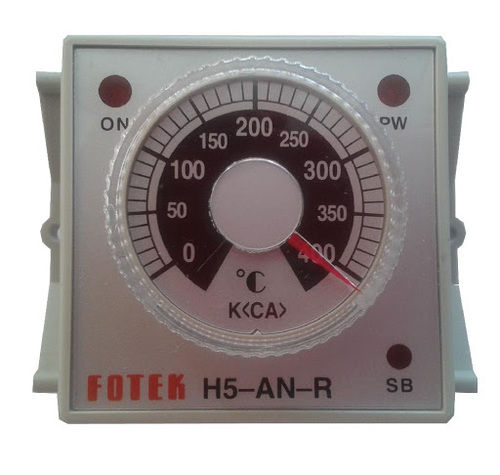
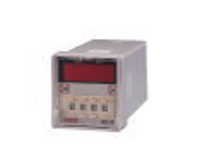
Fotek H5-AN-Temperature Controller Price & Specifications
Wireless No
Weight Approx. 200g
Voltage 100-240 VAC, 50/60 Hz
Usage Industrial automation, HVAC, process control
Signal Type Digital
Sensor Type Thermocouple/RTD (Pt100)
Sensitivity High
Response Time < 2 seconds
Resolution 1A C
Product Type Temperature Controller
Power Consumption < 5 VA
Output Relay output, SSR drive
Operating Temperature 0A C to 50A C
Mounting Type Panel Mount
Measurement Range 0A C to 999A C
Material ABS Plastic Body
Interface Screw terminal
Input Universal sensor input (Thermocouple, RTD, etc.)
IP Rating IP20
Function Temperature control with set point adjustment
Features LED display, Auto/manual tuning
Cable Length As per sensor
Application Oven, Furnace, Injection Molding, Packing Machine
Accuracy A 0.5% of full scale
About Fotek H5-AN-Temperature Controller Detail
The Fotek H5-AN-Temperature Controller is a valorous solution for those seeking wondrous control and precision in industrial automation. Featuring a 7-segment LED display with a vibrant red hue, this extraordinary device delivers reliable ON/OFF and PID temperature regulation with a cost-effective approach. Procure seamless management, thanks to its universal sensor input, programmable set points, and non-volatile memory backup. Crafted from durable ABS plastic, its suitable for oven, furnace, molding, and packing applications. Order now for unparalleled accuracy, high sensitivity, and robust performance in diverse environments.
Commercial Utility and Material Advantages
Engineered for industrial and HVAC commercial use, the Fotek H5-AN-Temperature Controller is fabricated from robust ABS plastic, ensuring durability in challenging settings. The universal sensor compatibility makes it ideal for ovens, furnaces, and injection molding machines, supporting seamless integration into process control systems. Its versatile design empowers dealers, manufacturers, and service providers to deploy it across India for consistent temperature management.
Sample Policy and Efficient Supply Capability
The Fotek H5-AN-Temperature Controller is dispatched promptly upon receiving a valid purchase order, ensuring minimal expenditure of time for procurement. Sample units may be available depending on dealer policy, allowing trial before large-scale orders. Reliable supply ability and swift delivery time make it an attractive choice for distributors, exporters, and wholesalers seeking efficient fulfillment and installation support across commercial sites.
FAQs of Fotek H5-AN-Temperature Controller:
Q: How does the Fotek H5-AN-Temperature Controller ensure precise temperature management?
A: The controller offers high accuracy (0.5% of full scale) and a fast sampling rate of 100 ms, ensuring extraordinary precision for critical industrial processes.
Q: What sensor types can be connected to the Fotek H5-AN-Temperature Controller?
A: It accepts universal input, supporting thermocouples and RTD (Pt100) sensors, making it suitable for varied industrial applications.
Q: When should I order samples of the Fotek H5-AN-Temperature Controller for evaluation?
A: Samples can be requested prior to bulk procurement, subject to the sample policy of your dealer or supplier.
Q: Where can the controllers installation take place?
A: Designed for panel mounting as per DIN standard, it can be installed in ovens, furnaces, packing machines, and other process control panels.
Q: What is the usual process for purchasing and delivery?
A: Upon placement of a purchase order, controllers are swiftly dispatched, ensuring timely and cost-effective procurement for your facility.
Q: How does the non-volatile memory feature benefit users during usage?
A: The non-volatile memory retains set points even during power outages, offering reliable and continuous operation without setup loss.
FAQs Related to Fotek H5-AN-Temperature Controller
What are the situations where it is required to install a temperature controller?
A temperature
controlling system is a good option for the application if the below-written
points are targeted:
Gain tighter
control over your process temperatures.
Save time and money
Regulate the heating
and cooling process.How do a temperature controller and sensor shooter work?
Usually, the
mechanism is such that the controller takes an input from the temperature
sensor like an RTD or thermocouple. The sensor then displays a digital readout
of the measured temperature followed by an automatic on or off sequence to
achieve the desired temperature at the mentioned set point. The sensor is
connected to a control element like a heater or fan.
Where are the temperature controllers often used?
Temperature
controllers or the PID are usually installed in applications where the user has
a constant requirement to regulate the temperature or create certain conditions
where the temperature increases or decreases as the specified set point.
Industries like thermoforming machines, packaging machines, food processing,
food storage, plastic extrusion, injection molding machines, and blood banks
need to install temperature controllers.
In industrial applications, what is the role of a temperature controller?
For any industrial
application, a temperature controller controls industrial or laboratory heating
and cooling. The sensor measures the actual temperature in the general model
and compares it with the previously set temperature. Thereby it makes an effort
to reach the set temperature by either cooling the temperature with a fan or
raising the temperature with the use of a heater.
What is temperature control in food handling?
The fundamental
principle and basic prerequisite for food safety in the food industry are that
the food handlers regulate the temperatures. This refers to a process in which
the temperature of all the food is controlled to ensure that it is safe for
consumption. If the temperature is not controlled, it could result in food-borne
illness, lawsuits, fines, and poor inspection ratings.

 GST No.27ACRPG0717F1ZQ


 Our Products