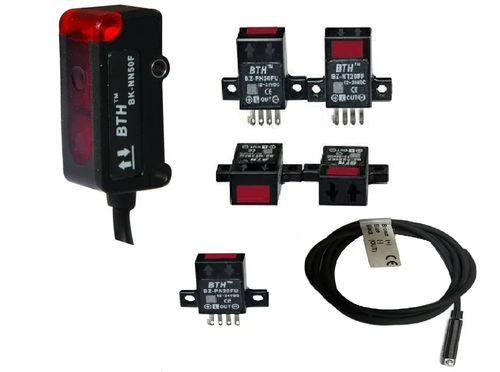
BTHBPRC-420 MagneticSensor- Dealer, Supplier
Weare dealer and supplier of BTHBPRC-420 MagneticSensor in India, Mumbai, Delhi,Ahmedabad, Chennai, Kolkata, Pune, Nashik, Aurangabad, Nagpur Vapi,Silvassa, Surat, Vadodara, Rajkot, Gandhidham, Morbi, Indore, Bhopal,Faridabad, Ghaziabad, Noida, Gurgaon, Coimbatore, Bangalore,Hyderabad, Kanpur, Goa, Visakhapatnam, Cochin, Ernakulam, Ludhiana,Chandigarh, Baddi, Dehradun, Sangli, Satara, Ichalkarnji, Solapur,Kupwad, Kolhapur, Pimpri, Chinchwad,Jalgaon, Surat, Baroda, Morbi,UAE, Bangladesh, Nepal, Bhutan, Dubai, Saudi Arabia, United ArabEmirates, Abu Dhabi, Bahrain, Qatar, Muscat, Oman, Sri Lanaka, SouthAfrica, Myanmar, Thailand, Vietnam, Jakarta, Indonesia.
Weare dealer, supplier of various manufacture of Bth Motion, BthEncoder Bth Pressure, Bth Process & Sensor Controller, Bth ReedSensor, Bth Inductive Sensor, Bth Analog & Capacitive Sensor, BthSensor Cable, Bth Photo sensor , Bth Fiber Sensor, Bth LiquidSensing, Bth SSR, Bth TPR, Bth DC Supply, Bth Signal.
Advanced Sensing for Industrial PrecisionEngineered for demanding automation environments, the BTH BPRC-420 features high sensitivity and a rapid response time of 1 ms, ensuring immediate and precise proximity detection. Its analog 4-20mA signal interface provides accurate, real-time data for superior process control.
Durability Meets ReliabilityCrafted with a stainless steel body and IP67 rating, the sensor withstands exposure to dust, water, vibration, and shock. This robust construction makes it ideal for continuous operation in diverse and challenging industrial settings.
Effortless Integration and Low MaintenanceWith a straightforward 3-wire connection, included 2m cable, and compatibility with standard brackets or panels, the BPRC-420 simplifies installation. Polarity and short-circuit protection reduce troubleshooting, while low power consumption ensures long-term cost savings.
FAQ's of BTH BPRC-420 Magnetic Sensor:
Q: How is the BTH BPRC-420 magnetic sensor installed?
A: The BTH BPRC-420 is designed for easy panel or bracket mounting using its compact, 18mm diameter stainless steel housing. Simply connect it using the pre-attached 2m cable and 3-wire configuration. Ensure a secure fit and proper electrical connections for optimal performance.
Q: What are the key benefits of using this magnetic sensor in industrial automation?
A: Key benefits include high accuracy (2% FS), fast response time (1 ms), and robust protection against dust, water, vibration, and shock. These features ensure reliable position sensing and reduced downtime, improving automation efficiency and process safety.
Q: Where can the BPRC-420 sensor be used?
A: The BPRC-420 is suitable for industrial automation, equipment position sensing, and other applications requiring precise, non-contact detection in harsh environments. Its compact and durable design makes it adaptable for use by dealers, distributors, manufacturers, and other industry professionals across India.
Q: What is the measurement range and output type of this sensor?
A: This sensor offers a measurement range of 0-100mm with a high-resolution analog output of 4-20mA. The analog signal makes it compatible with a wide variety of industrial controllers, monitoring systems, and automation interfaces.
Q: How does the sensor handle electrical protection and environmental hazards?
A: The BTH BPRC-420 includes builtin polarity and short-circuit protection to safeguard against wiring errors. Its IP67-rated stainless steel construction also protects internal components from dust, water, vibration (10-55Hz, 1.5mm amplitude), and shocks up to 30g (300 m/s2).
Q: When should I choose this sensor over other models?
A: Choose the BPRC-420 when you require high measurement accuracy, fast response, robust physical and electrical protection, and reliable performance in harsh industrial or automation settings where space and maintenance efficiency are also priorities.
Q: What is the process for integrating the BPRC-420 sensor with existing systems?
A: Integrating the sensor involves mounting it at the desired position, wiring the 3-wire connection to your control system, and calibrating according to your application's range requirements. The analog output can be directly interfaced with most standard industrial controllers or monitoring devices.

 GST No.27ACRPG0717F1ZQ


 Our Products